Sunday, January 31, 2016

Chronological Plan for Feb 1 Ex 7-9

Today's readings are Exodus 7-9. Tomorrow's are Exodus 10-12. 

God makes Moses like God to Pharaoh. This is a demonstration of God’s power to Pharaoh and would have sent a clear message to all who understood what was occurring. Egyptians worshiped a number of very powerful gods and would have viewed Pharaoh as a god over Moses. This is merely a hint at what is to come. The Egyptian gods are not only powerless against the one, true God, they are even powerless against the one sent by the one, true God.  

Note why God is doing what He does. God tell us in Ex 7:5 it is so that Pharaoh and the Egyptians will “…know that I am the Lord.” The primary goal is for God to reveal Himself as the one, true God! The Hebrews become the indirect beneficiaries of God demonstrating His glory to the world. Up until this point, God has revealed Himself to the Hebrews and some small groups. But, now, He will reveal more of who He is by exercising His authority over the most powerful nation in the world. The plagues will show His supreme power over every aspect of creation including water, land, animals, the weather, health, life and death.

Moses and Aaron perform signs before Pharaoh, asking him to allow the Hebrews to leave. A long line of plagues ensues, each one more disastrous than the one before. It's interesting to note that Pharaoh's magicians are able to keep up with the signs at first but are eventually overwhelmed at the absolute and sovereign power God expresses through Moses. It’s also significant to see that the magicians can influence what already exists, but cannot create (Ex 8:18). Only God has the power to create.

The plagues demonstrate God's complete authority over every facet of Egyptian culture. Whether they are believers in Him or not, He is still their creator and judge. For those that think non-belief exempts them from the wrath of God or His presence, look no further than the Egyptians and Pharaoh. 

Ex 9 ends with Pharaoh's heart remaining hardened by God, who has done exactly as He said He would do. It's an incredible demonstration of God's sovereignty and Pharaoh’s human responsibility functioning simultaneously. Can we fully explain it? No. But it is exceptionally clear the Pharaoh's heart has been hardened by God, even as he makes the conscious decision to resist Him, then begins to suffer the consequences for his actions. 


This is the glory and wonder of God, brothers and sisters, the unfathomable character and nature of He who has neither beginning nor end, the great "I am!" Human reasoning is unable to explain it. We can only bow down in wonder and awe and be thankful that someone more wise and powerful than us is in charge of our lives and has chosen not to harden our hearts, but to love us. 

Saturday, January 30, 2016

Chronological Reading Plan for Jan 31, Ex 4-6

Today's readings are Ex 4-6. Tomorrow's are Exodus 7-9.

In Ex 4, Moses continues to argue with God...but only up to a point. God will have His way! The constant excuses and gripes really are Moses trying to make sure God knows all the details. If Moses can just convince God He's made a bad decision, maybe God will find someone else. It's not a good idea to challenge God's wisdom. 

There's a curious paragraph in Ex 4:24-26. God seeks to kill Moses. Why? Moses has not yet circumcised his son, according to the covenant God established with Abraham in Gen 17. Moses is about to represent God to His children and to Pharaoh and he is blatantly disregarding the one command (so far) that sets God's people apart from all other peoples. Zipporah steps in and does the circumcision. God makes it clear, though this sobering little scenario, He will not be misrepresented nor taken casually. There is one way to be one of His children and only one way. That way cannot be tampered with. It is a foreshadow of the salvation available through His only Son, Jesus Christ. You come to God through His ordained way of salvation/sanctification...or you die!

One reality of the Scriptures some folks struggle with pops up when we see that God will harden Pharaoh's heart. Pharaoh's stubbornness shows up in ch 5. It will get worse. He confesses he does not know God in Ex 5:2. Through his hard heart, the Hebrews find out there is a worldly price to pay for their relationship with God. God's people are set apart and the world does not like it!


God reiterates His promise of redemption in Ex 6. He sent them to Egypt, ostensibly for food but the overarching theme was to get them away from the evil influence of the culture in Canaan where they had begun to intermarry.  This is evidenced by the presence Simeon's wife, a Canaanite woman, in the genealogy (Ex 6:14-25). Now He is going to bring them back to Canaan, having struggled under the weight of oppression but stronger and more numerous than ever before. God is good on His promise but the deeper, richer lessons are not easy to come by!

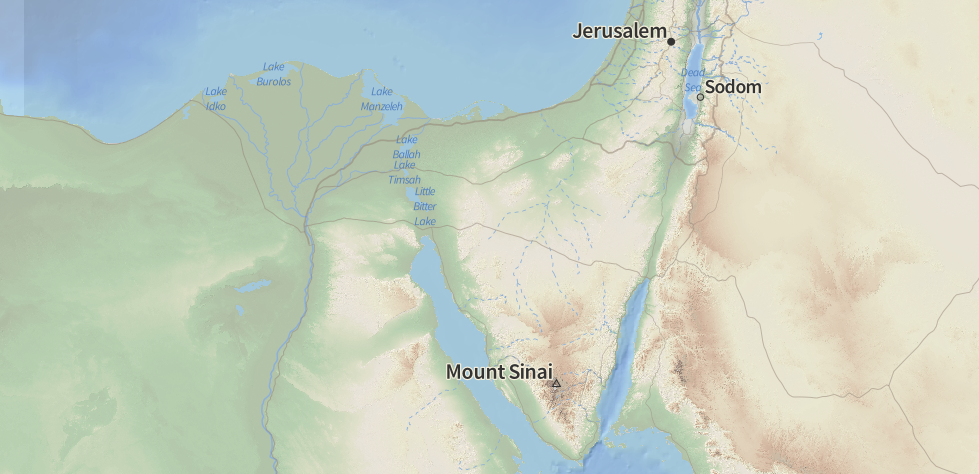
BTW, Mount Horeb, where God calls Aaron to meet Moses, is the place where Moses encountered the burning bush and was told, by God, that His people would return and worship Him there (Gen 3). Mount Horeb and Mount Sinai seem to be interchangeable. It is thought that Horeb may represent the mountainous area in which Sinai is located. Watch how events on this "Mountain of God" play out. God is always drawing His people there. You'll never see an instance in which someone goes "searching" for God and finds Him on Horeb. People end up at Horeb because God brings them there. This is another attribute of God that will be more fully revealed when Jesus says, "No one can come to me unless the Father who sent me draws him..." (John 6:44)


Friday, January 29, 2016

Chronological Reading Plan for Jan 30

Today's reading (Feb 3) is Exodus 1, 2 & 3. Tomorrow's is Exodus 4, 5 & 6.

Exodus starts about 400 years after the events in Genesis. The twelve sons of Jacob have now become twelve tribes of thousands each. Exodus is a stunning testimony to the faithfulness of God in fulfilling His promises. He will make Israel a great nation in spite of the opposition of the most powerful nation on earth and the faithlessness of His children. In looking at the big picture of how it fits into the Bible, we’ve seen God create everything, choose a people and begin to refine them and multiply them in Genesis. By the end of Genesis, His people are provided for, but find themselves as slaves, living among slaves. In Exodus, we’ll see how God delivers His people out of slavery.

Ch 1 opens with a veiled reminder of Genesis and the fact that God sent His children to Egypt. His promise is being fulfilled as they multiply into a huge number of people, so many that Pharaoh feels threatened. Hardship ensues. But God had told Abraham his descendants would struggle and He would deliver them. We see God's hand of protection upon them even though they are suffering. This is shown when the midwives refuse to murder the male babies for fear of God. In this, there is a lesson to be learned. The midwives are blessed for their commitment to the Hebrews babies. God blesses those who bless His people! 

Moses, after fleeing Egypt, is living in Midian when he encounters the burning bush. God speaks through the bush sending Moses back to Egypt to lead his people out. Moses feels inadequate for the task and objects, asking God what to say if he is asked who sent him. God does not relent, saying, "Tell them I AM!", effectively saying, “This is not about you, Moses. It is about Me!”


I love the burning bush story. So frequently we desire to hear a word from God. We hear about the burning bush and think, "I wish God would speak that clearly to me." Yet, what Moses heard was, most likely, the last thing he wanted to hear, 'I'm sending you back to Egypt." Ex 2:21 tells us Moses was content right where he was. 

Thursday, January 28, 2016

Chronological Reading Plan for Jan 29

Today's reading is Genesis 48-50. Tomorrow's is Exodus 1-3.

In Gen 48, Jacob moves on his faith. Not having seen the tangible end of the promise God gave him, he blesses Joseph's sons, passing on the promise that was given to him. Jacob does a strange thing, though. He deliberately confers a greater blessing upon Ephraim, the younger son, designating both boys as “his” sons, just as are Reuben and Simeon (Gen 48:5). Once the descendants of the twelve return to Canaan  and the land is divided up among the twelve resulting tribes, Joseph's descendants will be divided into two halves, Ephraim and Manasseh. Ephraim will become the greater of the two. As the tribes settle into their respective areas in the Promised Land, Ephraim will eventually become synonymous with the Northern Kingdom of Israel. This will not turn out to as great a blessing as it sounds. 

Jacob then blesses each of his twelve sons with prophetic blessings. The promise is passed on to them. But, they will each have their own struggles and victories. The path forward will not be easy. Still, in all Jacob proclaims over his sons, it is clear they will each have land. In this, the 12 tribes of Israel are identified. 


Jacob also mentions locations in the Promised Land (Canaan). We see a foreshadowing of the next major phase as we are about to move into the exodus from Egypt and the conquering of Canaan. Jacob refers to Bethel but calls it Luz, the name it had before Jacob changed the name. See the map for more.


Chronological Reading Plan for Jan 28

Today's readings are Gen 46-47. Tomorrow's are Gen 48-50.


Gen 46 finds Jacob's family moving to Egypt. God has used all the hardship and struggles of Jacob and his sons to place them exactly where He wants them. He has graciously provided for them when all around them are starving and dying. He will now use Egypt to build them into the nation He promised they would become. Keep your eye on what God is doing here. It is not by coincidence that, in the Bible, Egypt is a synonym for the world and it's fallen nature. Rather than His people becoming victims of Egypt, this powerful nation will become a tool in God's hands used to refine His people.

Jacob and His family travel to Egypt


God makes a promise to Jacob (Israel). God, Himself, will take him to Egypt and bring him back to the Canaan. Jacob's son, Joseph will "close his eyes". In other words, Jacob will see Joseph again and they will be together until Jacob dies. 


This is a promise within a promise and shows us that we should be careful how we interpret God's promises. As we will see, God will indeed bring Jacob to Egypt. God will also return him to Canaan (The Promised Land). He and the nation named after him will be blessed in a mighty way. But, Jacob will die while he is in Egypt and be buried in his homeland. God will be with him throughout, an assurance of continued blessing after Jacob's death.  

As Jacob's life end, we see that God has used his struggles to bring him closer, to bless him and those around him. Furthermore he will do the same with Jacob's sons, each of them, even though they may have some good points, as flawed and troubled as Jacob was. God shows us that He is the hope of a dysfunctional, struggling family. They have been petty, jealous, manipulative, deceitful, disobedient and fearful. Yet God has chosen Jacob and his twelve sons to bless the world. Keep this in mind as the story of Israel unfolds. The heads of the twelve tribes have been identified. These are the patriarchs if ancient Israel. Far from possessing Charlton-Heston-Cecil-B.-DeMille nobility and virtue, the are frighteningly normal people. 

Meanwhile, in ch 47, we see Joseph, the one who was sold into slavery to the Egyptians, selling the entire nation of Egypt into slavery. As a people, they were dependent upon God for the wisdom that saved them (the wisdom God gave Joseph). God provided the food they are eating. Now they have no possession no land and are even more dependent upon Him. Yet, as a nation, they do not follow God. 

Egypt has become a picture of God's common grace, benefiting from God's goodness without calling upon Him as the one, true God, even denying Him and following other gods. God is pleased to allow this because He us using Egypt for His own purposes in blessing and providing for His chosen people, Jacob and his family.

It would be easy to look at Egypt and feel offended that God is caring for them. "They haven't earned God's grace and favor!" our sensibilities scream. But, neither has Jacob and his family. In another few generations, God will say to Moses, "I will be gracious to whom I will be gracious, and will show mercy on whom I will show mercy." (Ex 33:19) 

Wednesday, January 27, 2016

Chronological Reading Plan for Jan 27

Today's readings are Gen 43-45. Tomorrow's are Gen 46-47.

Judah and Reuben were the ones who tried to defend Joseph against the brothers' plans to do him harm (Gen 37:21, 26). Now they are the two who attempt to save the family and preserve Benjamin. Reuben made his plea in Gen 42:37, Judah in Gen 43:3-5. 

The brothers return, with great trepidation, Benjamin in tow. Their fears are unfounded but they have great difficulty believing even the evidence they see. When they unsuccessfully try to return the money to the steward, he unwittingly utters a truth that should open their eyes, saying, "Your God and the God of your father has put treasure in your sacks for you." 

How easy it is to miss or minimize God's blessing when we are consumed with our circumstances and fear the outcome more than we trust our God. 

Still, Joseph tests his brothers, this time setting up Benjamin as a thief. When they are apprehended and Benjamin is threatened, Judah, although innocent, offers to take the punishment in his place (Gen 44:33). There is the faint echo of another innocent in the Tribe of Judah that will one day stand in the place of sinners and take their punishment on the cross.  

Even when Joseph reveals who he is to his brothers, their reaction is dismay, not rejoicing (Gen 45:3). They fear reprisal from their brother. That's what they've earned. Instead, they receive grace along with Joseph's testimony that God was in the middle of everything that happened and was in sovereign control all the while (Gen 45:5-8). 

The brothers are redeemed, the family is restored and prospers with the promise of new homes in Egypt. But, keep in mind that they are still human beings and still in need of refinement. Egypt looks pretty good to people who live in a land with no food. The riches they are showered with can be very attractive. They carry the promise of God that they will become a "great nation". All of this will come into play as the narrative develops. God is bringing them into Egypt, not as a reward for being good and godly people, but to show them that there is still much work to be done in their hearts and lives. They will enter Egypt with all the earthly things they could ever want or need. God wants them to have heavenly things. Those are not nearly so easy to come by. 

Monday, January 25, 2016

Chronological Reading Plan for Jan 26

Today's readings are Gen 41-42. Tomorrow's are Gen 43-45.

In chs 41 and 42, we see the familair story of the world-wide famine that leads to Joseph's brothers coming to Egypt in search of food. 

Notice that Joseph was unjustly thrown in prison (Gen 39:19-20). While he was in there, God blessed him (Gen 39:21) but did not remove him from the prison. As good as things sound for Joseph in ch 39, we find in Gen 41:14 that the prison was a pit where Joseph was unkempt and in need of a serious cleaning up before seeing Pharaoh. He clearly had special privileges but ancient Egyptian prisons were primitive, barbaric places meant for punishment and suffering. Joseph seems to bear this out in Gen 41:50-52 when he names his sons. 

God does not promise to deliver us from all of our circumstances. But He does promise to use us and bless us while we are in them. Joseph stayed in prison until God's perfect time to bring him out.

Joseph makes it clear to Pharaoh that God is not only the author of his dream but the sovereign ruler over the weather and the food supply, even in Egypt. Pharaoh acknowledges God's power and elevates Joseph. This points more to Pharaoh's pragmatic wisdom than it does to his commitment and surrender to the one true God.  Ironically, Pharaoh sees something godly in Joseph, something his own brothers have failed to see all along. 

When Joseph's brothers arrive, even though Joseph tells them he fears God (Gen 42:18), they have no clue that he is their brother. It seems the prospect of their brother, having not only survived the ordeal they put him through, but actually having been elevated to the role of the man standing before them, is so unlikely that they are blinded to their common faith and family. The fact that Joseph is clearly not Egyptian, may actually resemble them, shares their faith and seems to be asking informed questions seems to escape them. 

Isn't that typical? Everyone around Joseph sees God's hand moving in his life but his family. Many of us can relate to this. Those closest to us can sometimes be quick to see our faults and slow to see God moving in our lives? Jesus's words ring true, "A prophet is not without honor except in his hometown or in his own household." (Mt 13:57)

Joseph is not perfect. He has his own struggles. He plays with his brothers sending them home for proof he doesn't really need. He keeps Simeon, implying he will be executed as a spy if they don't return with Benjamin.

When the brothers return home, they misrepresent how the exchange between them and Joseph played out. Israel refuses to send Benjamin, knowing he will lose Simeon, perhaps concerned that Simeon's case is hopeless, perhaps favoring Benjamin over Simeon. Through it all, there is the constant reminder of Joseph's disappearance and presumed death. 

What can be easy to miss in this narrative is God's gracious treatment of all involved. He spares Egypt, a pagan nation. In sparing Egypt, He blesses Joseph, then his brothers, delivering them from the famine and providing food for them when the whole world is starving. All this occurs as they continue to stumble over their own bad decisions, fears and faults. God uses the common grace shown to the pagans to bless and prosper His chosen people, not because they are a great people but because He is a great God!

Sunday, January 24, 2016

Chronological Reading Plan for Jan 25

Today's readings are Gen 38-40. Tomorrow's are Gen 41-42. 

Look at the people in these closing chapters of Genesis carefully. We're looking at the pillars of the Bible, the foundations of our faith, the revered names and places we all know. We see them for exactly who they are, normal people with normal struggles...just like you and me. There's not a single individual in these passages that is a holy, sanctified, super-spiritual man or woman of God. None of them get it all right. 

Still, God is using them, refining them, teaching them, loving them and moving them forward. Why? Certainly not because they have earned His affection! But, because He is God, He has a plan and He will use normal, flawed, struggling people to bring that plan to fruition. 

We have hope, not because of who we are or what we do, but because we have a God that is able to take our imperfections and make something beautiful out of them, just as He's doing with Jacob. 


Keep your eyes open. We're about to see that God is gracious and loving (we've clearly seen that, so far)...but there is a price to pay for disobedience.  

In ch 38, it becomes clear that Jacob's sons are beginning to slide further into the things they were told to avoid and letting the native people have a heavy influence on them. Judah takes a wife from among the Canaanites and another from Er. Needless to say, things do not go well. 

Meanwhile, Joseph is prospering in Egypt, in spite of his brothers' evil intent. We'll see, as Joseph's story unfolds, that God will use Joseph to remove Jacob and his backsliding sons from the evil influence of the Canaanites. 

Once again, we see God's grace, intervening even when His children are unfaithful and weak. He chastises them, but moves them, protects them and provides for them. Notice how God is working in Joseph's life and the life of his family long before they are able to see His hand moving. The foundation for the move to Egypt is being laid! 

It makes me wonder what foundations are being built in my life right now. What is God doing, behind the scenes in each of our lives that will bring His gracious provision and protection when we need it most?

Saturday, January 23, 2016

Chronological Reading plan for Jan 24

Today's reading is Gen 35-37. Tomorrow's are Gen 38-40. 

Rachel dies giving birth to Benjamin. The twelve sons, many from different mothers, none of whom are from Canaan, are now in place. Jacob (reminded of being Israel) has been faithful not to intermarry.

Meanwhile, Esau, who married descendant of Ishmael, has a lot of children as well. God has promised him that he will produce 12 "princes" and be the father of nations, as well as Jacob. If you look at the names of Esau's sons, you'll see the beginning of a number of tribes that will cause trouble for Jacob's 12 for many years. The promise that Ishmael would be a "wild ass of a man" is coming true for him and for his descendants. 

Then  we hear from Joseph, who relates some dreams he has had to his brothers. The dreams, which are truly prophetic, set in motion a series of events that only God could turn into blessings. The brothers sell Joseph and look who buys him...Ishmaelites! God is going to use these fallen, evil people to work out the details in His plan for Joseph's life!

Once again, we see that Jacob (Israel's) family is comprised of flawed human beings, rife with pride, jealousy, pettiness and fully capable of terrible and evil behavior.


Watch God's amazing grace through all this. Watch how He redeems even the worst of people, like Jacob and his sons. See the hope you and I have in knowing God has a plan for us and our children, just like He had for Jacob and his.  

Snow in the Bible!

A great way to star a snowed-in day by guest blogger, Pastor Scott Ferrell.


Snow in the Bible
Jan. 24, 2016
Pastor Scott Ferrell

Did you notice it snowed this weekend?

Since snow is obviously on everybody’s mind right now–the sheer quantity of it has caused us to cancel our worship services and other activities at the church on Sunday–I thought we might have a little fun by playing in the snow of the Bible.

You might want to use this as your meditation for Sunday morning as you worship at home with your family, or over a cup of hot chocolate.

We’re going to take quick look at references to snow in Bible. We won’t plow into great detail, but we will shovel deep enough to be built up in our faith, perhaps at least having accumulated a deeper appreciation for snow puns.

But seriously, there are some good lessons to be learned, because the Word of God is always a blessing.

So let’s dig in.

There are 24 direct references to snow in Bible.

Job leads way with a blizzard of 5; the Psalms pile up 4; Proverbs builds a snowman at 3; Isaiah has 2 snowballs; and Exodus, Numbers, 2 Samuel, 2 Kings, 1 Chronicles, Jeremiah, Lamentations, Daniel, Matthew, Revelation each have a dusting of one each.

Only two of those references mention snow incidentally, essentially saying, “It snowed.” Both of those references tell same story of how Benaiah, who was captain of David’s body guard, killed a lion in snow (2 Sam. 23:20; 1 Chron. 11:22).

But the remaining 22 references to snow all have to do with spiritual truth. They fall into several general categories, some of them a little surprising, as HS speaks through various writers.

We won’t cover every single one of them here (that would be an avalanche of information), but we’ll at least take a quick look at most of them. (There’s a list below of all them.)

Since many wives have been busy today bundling up the kids, and then unbundling them later, doing laundry, and cleaning floors made slushy by little feet, it’s only fitting to start with Prov. 31:21, which describes an excellent wife:

21 She is not afraid of snow for her household, for all her household are clothed in scarlet.


Red clothes make her unafraid of snow? That doesn’t make a bit of sense, does it? The idea behind this is that because she’s a loving wife and mother, she takes care to clothe her family in garments that will adequately protect them from weather (scarlet clothes would be the clothes of royalty, expensive and high quality), especially when there’s two feet of snow on the ground. It’s an expression of her love, an expression of her dedication to her family.

Next, Jeremiah uses an ironic reference to snow to demonstrate Israel’s unnatural unfaithfulness to God in Jer. 18:14

Does the snow of Lebanon leave the crags of Sirion? Do the mountain waters run dry, the cold flowing streams?

In other words, just as strange as it would be for snow not to cap the Rocky Mountains or Mount Everest, it’s unnatural for Israel to be unfaithful to God. Likewise, our unfaithfulness to God is equally unnatural. Though we’re not perfect, our faithfulness to God should always be growing as we grow and mature in our faith, as we mature in Christ (Eph. 4:13; Heb. 5:14).

That sense of irony is what makes point of Prov. 26:1:

Like snow in summer or rain in harvest, so honor is not fitting for a fool.

It’d be foolish to honor a fool by giving him leadership, allowing him charge over others, or to affirm him as competent when he is not. Such affirmation is out of place, just like snow in the summertime.

Old Testament authors also saw snow as a symbol for how God blesses us, as in Prov. 25:13:
13 Like the cold of snow in the time of harvest is a faithful messenger to those who send him;
he refreshes the soul of his masters.

This doesn’t mean that Proverbs 26:1 has actually come to pass–that it snowed in summertime. This is a reference to how during harvest time they would carry snow down from mountains to refresh the workers as they labor in the hot fields. This is like that glass of lemonade on a hot day after you’ve cut the grass.

So the point of this Proverb is that a faithful messenger refreshes the soul of his masters. What comes to mind is Hebrews 1:1–2:


1 Long ago, at many times and in many ways, God spoke to our fathers by the prophets, 2 but in these last days he has spoken to us by his Son, whom he appointed the heir of all things, through whom also he created the world.

The refreshment that God’s messengers brought down to us from heaven is in every book of the Bible, and its value and nourishment is immeasurable. When we receive its blessing as we study our Bibles and receive the preaching of the Word is like snow brought down from the mountain to refresh us as we labor in these fields that are ripe for harvest.

That’s the kind of comfort God’s word brings to us in Isaiah 55:10–11.

“10       For as the rain and the snow come down from heaven and do not return there but water the earth,
making it bring forth and sprout, giving seed to the sower and bread to the eater,
11        so shall my word be that goes out from my mouth; it shall not return to me empty,
but it shall accomplish that which I purpose, and shall succeed in the thing for which I sent it.

As surely as rain and snow brings life, God’s word will accomplish everything God intends. There’s not a chance that God or his Word will be overcome in any way.

Isaiah 40:8
8          The grass withers, the flower fades, but the word of our God will stand forever.

But some of us have trouble seeing the blessing of snow (we won’t mention any names, Pastor John!). Maybe we’re of the mind that it’s something to be overcome

That’s part of the thought of Psalm 147:13–20. This is a song about how God heals the broken hearted:

13       For he strengthens the bars of your gates; he blesses your children within you.
14       He makes peace in your borders; he fills you with the finest of the wheat.
15       He sends out his command to the earth; his word runs swiftly.
16     He gives snow like wool; he scatters frost like ashes.
17       He hurls down his crystals of ice like crumbs; who can stand before his cold?


18       He sends out his word, and melts them; he makes his wind blow and the waters flow.

So here snow is a gift, soft like wool, yet the cold that accompanies it is something to be dealt with–who can stand before it?–as God hurls down ice in the form of hail and sleet. Yet by the power of God’s word he controls them, and causes snow to melt, and therefore causes even what seems to be a hardship to be a blessing to us.

Even more, I love what Matthew Henry, a biblical scholar of 300 years ago, had to say about it:

“ Men cannot, but are forced to protect themselves by fires, or furs, or both, and all little enough where and when the cold is in extremity. We see not the causes when we feel the effects; and therefore we must call it his cold; it is of his sending, and therefore we must bear it patiently, and be thankful for warm houses, and clothes, and beds, to relieve us against the rigour of the season, and must give him the glory of his wisdom and sovereignty, his power and faithfulness, which shall not cease any more than summer, Gen. 8:22. And let us also infer from it, If we cannot stand before the cold of his frosts, how can we stand before the heat of his wrath.”

That’s why the Psalmist sees the cold, and yes, even the snow, as a gift. It causes us to be thankful when we’re warm, and to remember that we stand before God, who holds all things in his hands; we depend on him, trusting him to use all things for his good.

And yet snow is used in the Old Testament to describe something fearfully awful. Snow itself isn’t seen that way, but as God deals with sinners, with those who rebel against him, he uses on a few occasions a wretched, then-incurable disease as a means of discipline; this disease is described visually to be “like snow.”

The first reference to this–and in fact it’s the first time the word “snow” is used in scripture–is in Exodus 4:6, when God is giving Moses miraculous signs to use to prove to the Egyptians that he did, indeed, speak for God himself.

6 Again, the LORD said to him, “Put your hand inside your cloak.” And he put his hand inside his cloak, and when he took it out, behold, his hand was leprous like snow. 7 Then God said, “Put your hand back inside your cloak.” So he put his hand back inside his cloak, and when he took it out, behold, it was restored like the rest of his flesh.

So in this instance the miracle is, of course, a sign of God’s power, his is power to cause calamity and to remove it, the calamitous disease is described as being “leprous like snow.”

“Leprosy” lumps several skin diseases together, and includes not only actual leprosy but also a variety of serious infectious skin diseases that were likewise feared in biblical times. So God’s absolute control over this disease, both in causing and curing it, is profound.


The New American Commentary on Exodus says, “For Moses to say, in effect, ‘Look what Yahweh can do with disease!’ was virtually to ask, ‘Can any god you’ve been worshiping heal like this?’”

And God did, indeed, cause leprosy to discipline in two other instances. In Numbers 12, Miriam and Moses oppose Moses:

9 And the anger of the LORD was kindled against them, and he departed.
10 When the cloud removed from over the tent, behold, Miriam was leprous, like snow.

And the lying, greedy Gehazi, a servant of Elisha, also received the same discipline in 2 Kings 5:27.

Therefore the leprosy of Naaman shall cling to you and to your descendants forever.” So he went out from his presence a leper, like snow.

And so we see in these examples that snow describes sickness–impurity–that God uses as means of discipline for those who ignore and rebel against him.

But we’ve saved the good news for last. Snow also represents purity and holiness.

Psalm 51 is a beautiful prayer of humility before God; David had sinned with Bathsheba, and he’s now broken with conviction of his sin in verse 3.

For I know my transgressions, and my sin is ever before me.

He continues his prayer of repentance asking God to verse 10,

Create in me a clean heart, O God, and renew a right spirit within me.

In verse 7 David also pleads that God would,

Purge me with hyssop, and I shall be clean; wash me, and I shall be whiter than snow.

Snow was whitest thing known to man in David’s time. White represented holiness and purity. So David is asking the One who is truly pure to make him pure. He recognizes his own sin and the indelible stain it has caused.

Yet just as only God could cause leprosy to disappear, so could only God remove the guilt of David’s sin and restore him to right relationship with his creator

That’s precisely the point of Isaiah 1:18–20.

18 Come now, let us reason together, says the LORD: though your sins are like scarlet,
they shall be as white as snow; though they are red like crimson,
they shall become like wool.

Only God has the power to remove such a stain as sin. And the great, beautiful and awful paradox of God’s truth is that he has washed us clean with blood. Crimson though it was, he who poured it out is holy, and that’s why his blood has the power to cleanse us (Heb. 9:14).

Finally, speaking of Christ, the Revelator brings to mind Dan. 7:9, where God is portrayed as an old man, the Ancient of Days, whose his hair is compared to pure wool, and whose clothing is white as snow.

Revelation 1:14–16
14 The hairs of his head were white, like white wool, like snow. His eyes were like a flame of fire.

All of this reflects the ancient Near Eastern attitude toward the elderly, that they are to be held in high esteem and honor because of their wisdom.

That’s how we should regard Christ. He is to be held with reverence and awe in our hearts. Christ is, as he proclaims in verse 17b-18, “the first and the last, 18 and the living one. I died, and behold I am alive forevermore, and I have the keys of Death and Hades.”

Our Lord is holy, he is pure, just like new fallen snow.

He died, but he lives. And he lives forevermore. No power can defeat him because he’s got the keys even to the gates of hell; after Christ comes back for his own, those gates shall be locked forevermore.

As we experience this historic snowstorm, my prayer is that it will be for us a reminder of the great and mighty God we have. By his Word he sends the snow and he melts it; his word shall stand forever. He disciplines us. He brings us comfort. He brings us salvation.

How? By washing us with his blood, so that we are “whiter than snow.”


References to Snow in the Bible
English Standard Version 24 results in 24 verses

Exod 4:6
Again, the Lord said to him, “Put your hand inside your cloak.” And he put his hand inside his cloak, and when he took it out, behold, his hand was leprous like snow.

Num 12:10
When the cloud removed from over the tent, behold, Miriam was leprous, like snow. And Aaron turned toward Miriam, and behold, she was leprous.

2 Sam 23:20
And Benaiah the son of Jehoiada was a valiant man of Kabzeel, a doer of great deeds. He struck down two ariels of Moab. He also went down and struck down a lion in a pit on a day when snow had fallen.

2 Kings 5:27
Therefore the leprosy of Naaman shall cling to you and to your descendants forever.” So he went out from his presence a leper, like snow.

1 Chron 11:22
And Benaiah the son of Jehoiada was a valiant man of Kabzeel, a doer of great deeds. He struck down two heroes of Moab. He also went down and struck down a lion in a pit on a day when snow had fallen.

Job 6:16
which are dark with ice, and where the snow hides itself.

Job 9:30
If I wash myself with snow and cleanse my hands with lye,

Job 24:19
Drought and heat snatch away the snow waters; so does Sheol those who have sinned.

Job 37:6
For to the snow he says, ‘Fall on the earth,’ likewise to the downpour, his mighty downpour.

Job 38:22
“Have you entered the storehouses of the snow, or have you seen the storehouses of the hail,


Ps 51:7
Purge me with hyssop, and I shall be clean; wash me, and I shall be whiter than snow.

Ps 68:14
When the Almighty scatters kings there, let snow fall on Zalmon.

Ps 147:16
He gives snow like wool; he scatters frost like ashes.

Ps 148:8
fire and hail, snow and mist, stormy wind fulfilling his word!

Prov 25:13
Like the cold of snow in the time of harvest is a faithful messenger to those who send him; he refreshes the soul of his masters.

Prov 26:1
Like snow in summer or rain in harvest, so honor is not fitting for a fool.

Prov 31:21
She is not afraid of snow for her household, for all her household are clothed in scarlet.

Isa 1:18
“Come now, let us reason together, says the Lord: though your sins are like scarlet, they shall be as white as snow; though they are red like crimson, they shall become like wool.

Isa 55:10
“For as the rain and the snow come down from heaven and do not return there but water the earth, making it bring forth and sprout, giving seed to the sower and bread to the eater,

Jer 18:14
Does the snow of Lebanon leave the crags of Sirion? Do the mountain waters run dry, the cold flowing streams?

Lam 4:7
Her princes were purer than snow, whiter than milk; their bodies were more ruddy than coral, the beauty of their form was like sapphire.


Dan 7:9
“As I looked, thrones were placed, and the Ancient of Days took his seat; his clothing was white as snow, and the hair of his head like pure wool; his throne was fiery flames; its wheels were burning fire.

Matt 28:3
His appearance was like lightning, and his clothing white as snow.

Rev 1:14

The hairs of his head were white, like white wool, like snow. His eyes were like a flame of fire,